
Gilmanton – Twigg
 Route 107, Loon Pond and Meetinghouse Pond Roads
85 acres of fields and forests
No dedicated public access
December 2013 and September 2017
The four protected properties, formerly owned by long-term Gilmanton resident George Twigg, III, have been conserved for agriculture and public enjoyment, under conservation easements held by the Five Rivers Conservation Trust. Gilmanton Land Trust, a local organization, undertook the project, in cooperation with Five Rivers, to raise the nearly $1.2 million needed to secure the future of four key properties owned by Mr. Twigg, including the views long admired by residents and travelers through the town.
The land conserved includes four parcels:
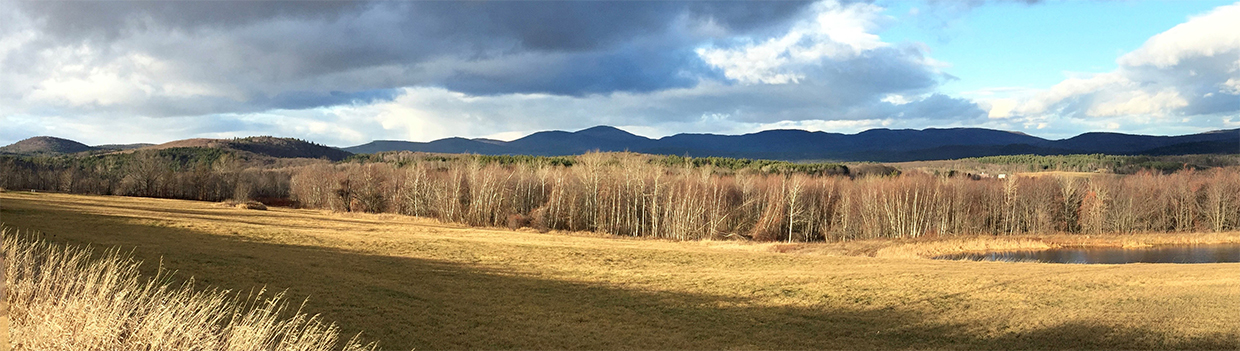
- The 15-acre tract on the top of Frisky Hill (Route 107) with views to the north and east over fields, hills and the Belknap Mountains
- A 21- acre parcel, also on Rt. 107, looking northerly over Loon Pond to rolling hills and Mount Kearsarge beyond
- An 8-acre field on Loon Pond Road providing access to a cemetery once used by the Osgood family
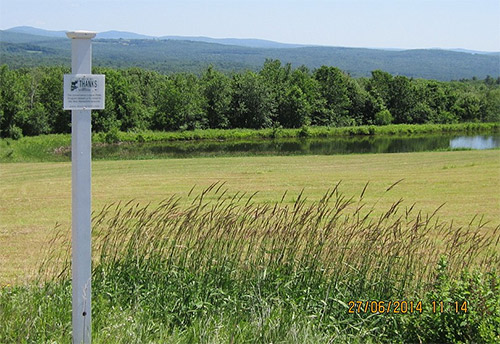
- A 41- acre tract of fields and forests with extensive frontage on Meetinghouse Pond across from the historic Smith Meetinghouse complex. This parcel includes the Tom Howe Barn, a 19th century barn now used by the Gilmanton Historical Society to house its Gilmanton Agricultural Museum. It has been named the Tom Howe Barn in honor of Tom Howe’s efforts to conserve this land and so many others in Gilmanton. Near the Tom Howe Barn is the State’s only known “retting pond” where flax in the 18th and 19th centuries was “retted” before it could be processed into linen fibers. The extensive stone structure built across the pond’s bottom for processing flax is the only known example of such a feature in the State of New Hampshire.
The Frisky Hill view toward the Belknaps and the Meetinghouse Road parcels are now owned by the Town of Gilmanton (subject to conservation easements held by Five Rivers) under the stewardship of the Conservation Commission.